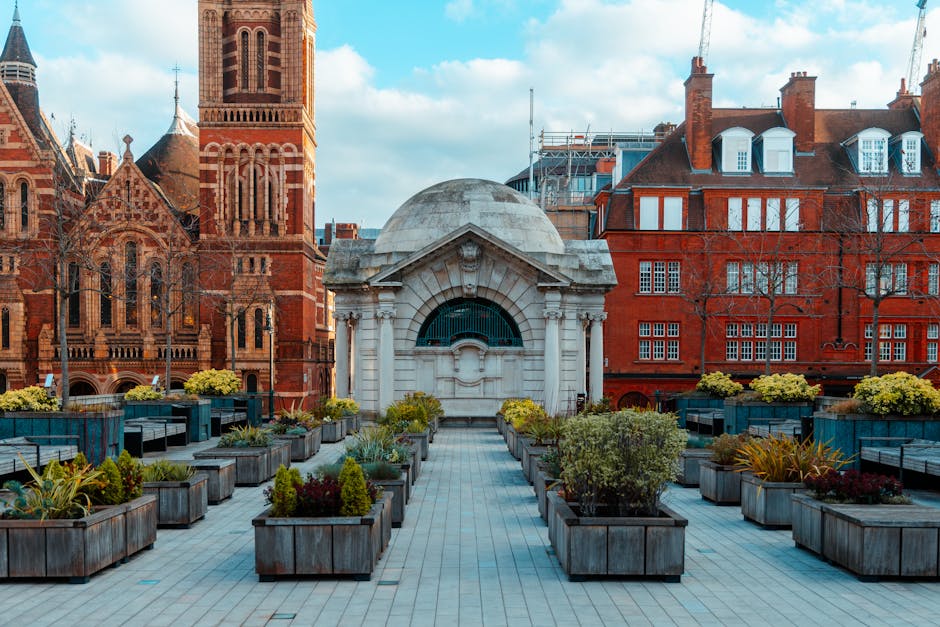
WC1 gardeners for Lincolns Inn Fields terraces
Terrace gardening in Lincolns Inn Fields is a bit of a balancing act. You want something green, calm and polished, but you also need it to cope with London dust, patchy shade, restricted access, and the usual day-to-day wear that comes with city living. That is where WC1 gardeners for Lincolns Inn Fields terraces make a real difference. They understand how to keep compact outdoor spaces looking cared for without turning them into high-maintenance projects you quietly dread every few weeks.
If your terrace is a small seating area, a planted courtyard, or a narrow strip of paving with containers and climbing plants, the approach needs to be thoughtful. A good gardener does more than cut things back. They help create a rhythm: tidy edges, healthy planting, seasonal refreshes, and a practical maintenance plan that actually suits the way people use the space. Let's face it, nobody wants a beautiful terrace that becomes a headache.
This guide walks through what WC1 terrace gardening involves, why it matters in this part of central London, how the work usually unfolds, and what to look for when choosing support. It also covers common mistakes, compliance considerations, and a checklist you can use before booking work. If you want a smarter, calmer outdoor space, you are in the right place.
Contents
- Why WC1 gardeners for Lincolns Inn Fields terraces Matters
- How WC1 gardeners for Lincolns Inn Fields terraces Works
- Key Benefits and Practical Advantages
- Who This Is For and When It Makes Sense
- Step-by-Step Guidance
- Expert Tips for Better Results
- Common Mistakes to Avoid
- Tools, Resources and Recommendations
- Law, Compliance, Standards, or Best Practice
- Options, Methods, or Comparison Table
- Case Study or Real-World Example
- Practical Checklist
- Conclusion
- Frequently Asked Questions
Why WC1 gardeners for Lincolns Inn Fields terraces Matters
Terraces around Lincolns Inn Fields are not the same as a suburban back garden. Space is tighter. Light is often limited by surrounding buildings. Wind can funnel between walls and railings. And access for equipment, waste removal, or even moving a heavy planter can be awkward. All of that changes how a garden should be designed and maintained.
In a place like WC1, terrace gardening is about using every square metre with intention. A well-kept terrace can soften a hard city landscape, make a flat feel more liveable, and give you a place to sit with coffee on a mild morning without looking at tired pots and overgrown stems. That sounds simple, but in practice it takes judgement.
Good local gardeners understand the realities of central London properties. They know that terrace plants often live in containers, not borders. They know that watering needs are higher in raised planters and that drainage matters more than people think. And they know that a small mistake, like choosing the wrong shrub for a windy terrace, can leave you replacing plants before the season is out. A bit annoying, to be fair.
There is also a strong visual element. Lincolns Inn Fields is an area where the surroundings already carry a certain character. A terrace should feel in keeping with that setting: neat, tasteful, and not overworked. A good gardener helps you avoid the common mismatch between "lush" and "chaotic". Those are not the same thing.
For many residents and property managers, this work is not just about appearance. It is about ongoing value, usability, and peace of mind. When plants are healthy and hard surfaces are kept clean, the whole terrace feels better maintained. That can matter whether the space is private, shared, or part of a managed property.
How WC1 gardeners for Lincolns Inn Fields terraces Works
Terrace gardening usually starts with an assessment. This is where the gardener looks at the space as a whole: sunlight, shade, access, drainage, existing plants, pot condition, soil quality, and how often the terrace is used. On a compact site, these details matter more than people expect. A small terrace can still have complex needs.
From there, the work is normally shaped around one of a few maintenance models. Some terraces need regular visits for trimming, deadheading, watering, and cleaning. Others need a one-off reset after neglect, followed by a lighter maintenance schedule. And some need a mix of soft landscaping and practical fixes, such as replacing damaged containers, refreshing compost, or improving the layout so the space feels more open.
In practice, the gardener may combine tasks such as:
- container planting and replanting
- seasonal pruning and deadheading
- lawn care where small planted grass areas exist
- hedge trimming or shaping of screening plants
- litter and leaf clearance
- weeding and moss control on hard surfaces
- watering checks and plant health monitoring
- small-scale landscaping advice for layout improvements
If a terrace has larger structural changes in mind, it can be helpful to look at broader services like the full services overview or related options such as landscaping and landscape gardening. That is especially useful when the terrace is being rethought, not simply maintained.
For a lot of people, the key is consistency. One-off visits can tidy a space, yes, but they do not always solve the underlying problem. Terrace plants need rhythm. Containers dry out quickly in summer, and even a tidy-looking setup can struggle if nobody is checking the basics. Morning sun, hot paving, reflected light, and a couple of dry days can change things fast. Faster than you think.
Key Benefits and Practical Advantages
There is a clear difference between a terrace that is "technically planted" and one that feels thoughtfully cared for. The benefits of using skilled WC1 gardeners for Lincolns Inn Fields terraces tend to show up in the everyday details.
First, better plant health. That sounds obvious, but it is often where the biggest improvement comes from. A good gardener chooses suitable species, manages watering properly, and spots issues early. That means fewer sad-looking planters and less money wasted on replacement plants.
Second, a cleaner and more usable space. Leaves, petals, fallen compost, and general grit build up quickly on terrace surfaces. Regular maintenance keeps the area pleasant underfoot and makes it more inviting for sitting, entertaining, or simply opening the doors and seeing something calm.
Third, smarter use of limited space. Terrace gardens are often about form as much as planting. A gardener can help create structure with containers, screening plants, evergreen anchors, and seasonal colour without overcrowding the area.
Fourth, less stress for the property owner. That matters more than people admit. If you know someone is checking the space properly, you are not constantly wondering whether the rosemary has dried out or whether the climber has started swallowing the railing.
Fifth, better long-term value. Well-kept terraces support the overall presentation of a home or managed building. Whether you are thinking about everyday enjoyment or broader property appeal, the effect is real.
Here is a small but important point: good terrace gardening is not always about adding more. Sometimes it is about editing, simplifying, and choosing things that will thrive rather than just impress for two weeks in spring. That is the trick, really.
Who This Is For and When It Makes Sense
WC1 terrace gardening support makes sense for a few different kinds of people. You may recognise yourself in one of these situations:
- Homeowners who want a terrace that is attractive but not demanding.
- Tenants who need help keeping an outdoor space presentable and manageable.
- Landlords and property managers who want regular upkeep between tenancies or during longer occupancy periods.
- Busy professionals who simply do not have the time for detailed plant care.
- Small businesses with rooftop or terrace planting that contributes to the space's atmosphere.
- Older residents who prefer reliable help with lifting, pruning, or routine tasks that are becoming less convenient.
It also makes sense when the terrace has a specific problem. Maybe the plants are leggy and tired. Maybe the paving keeps collecting debris. Maybe the whole area feels underused because the layout is awkward. Or maybe you inherited a terrace that was clearly designed by someone with enthusiasm, but not much follow-through. It happens.
If you already know the space needs a deeper clear-out before it can be maintained properly, a service such as garden clearance may be the right starting point. If your focus is ongoing tidiness rather than redesign, garden maintenance is usually the more practical fit.
One useful rule of thumb: if you feel slightly embarrassed every time you step onto the terrace, the space probably needs more than a quick sweep. That is usually the moment to call in proper help.
Step-by-Step Guidance
Getting a terrace into better shape does not have to be complicated. In fact, the best results often come from a straightforward sequence.
- Look at the space honestly. What is working? What is not? Which plants are healthy, and which ones are just hanging on?
- Check the conditions. Note sunlight, shade, wind exposure, drainage, and how often the terrace gets used.
- Clear away clutter and waste. Remove dead foliage, broken pots, and any debris that has built up in corners or under planters.
- Prune and reshape. Trim back plants that are blocking light, overflowing paths, or becoming too woody.
- Refresh the planting structure. Replace tired plants, improve containers, and group species sensibly by water and light needs.
- Improve the soil or compost. Container plants need good growing media. If it is exhausted, everything else becomes harder.
- Set up a watering rhythm. This is especially important in summer and during dry spells.
- Plan repeat visits. A terrace is not a "do it once and forget it" space. Seasonal follow-up keeps it looking good.
If you are unsure where to start, begin with the visible problems. A messy terrace usually has a clear order of priorities: clean-up first, structure second, planting third. Trying to redesign before clearing the clutter often leads to extra work later. Not ideal.
Many experienced gardeners also work to a simple visual rule: give every terrace at least one anchor feature, one softening feature, and one piece of easy upkeep. For example, that might be a small evergreen shrub, a trailing or flowering plant, and a container that is easy to water and move. Balanced, not busy.
Expert Tips for Better Results
Terrace work is full of small decisions that add up. Here are a few that make a big difference.
Choose plants for the actual conditions, not the wishful ones. A sunny patio in a brochure is one thing. A terrace with half-day shade, reflected heat and a bit of wind is another. Choose accordingly.
Use containers that suit the scale of the space. Too many tiny pots can make a terrace look cluttered. A few well-chosen larger containers usually feel calmer and are easier to maintain.
Prioritise evergreen structure. Seasonal flowers are lovely, but if everything dies back at once the terrace can look bare. A backbone of evergreen planting keeps it presentable year-round.
Be careful with climbers. They can be brilliant for privacy and softness, but they need regular guidance. Without it, they can get unruly surprisingly quickly.
Keep maintenance realistic. If a plant needs daily attention and you are away most of the week, that is not a good match. Truth be told, many terrace failures come from over-ambitious planting plans.
Refresh compost before it gets exhausted. Container soil loses structure and nutrients over time. If pots start looking tired, the problem is not always the plant.
Think in layers. Low planters, mid-height shrubs, and taller screening plants create depth without crowding the space.
And one little practical note: if you are planning an outdoor table or seating area, leave more space than you think you need. People always underestimate how much room a chair needs when someone is actually pulling it out.
Common Mistakes to Avoid
Terrace gardening mistakes are usually not dramatic. They are small, repeated issues that slowly wear the space down.
- Choosing plants for looks alone. Pretty is good. Suitable is better.
- Overcrowding containers. This leads to poor airflow, more watering stress, and a fussy appearance.
- Ignoring drainage. Sitting water is bad news for roots and hard surfaces alike.
- Forgetting seasonal change. A terrace that looks fine in April may look exhausted by August if nobody adjusts the care routine.
- Letting hedging or screening plants get too dense. That can block light and make the terrace feel smaller.
- Using the wrong tools for the space. Heavy equipment can be awkward or unnecessary on a compact terrace.
- Delaying a proper clear-out. Once debris, dead growth and broken items build up, maintenance becomes more difficult and more expensive.
There is also a subtle mistake people make when working in central London terraces: they underplay the role of presentation. Because the space is small, every detail is visible. A neglected corner, a wobbly pot, or a hedge that has gone a bit shaggy stands out more than it would in a larger garden. Small space, big impact.
If hedges or screening plants are part of the terrace setup, regular hedge trimming can keep them neat without losing shape. And if there are trees close to the property edge or light is being heavily blocked, specialist tree lopping and removal advice may be needed, though only where appropriate and properly assessed.
Tools, Resources and Recommendations
Good terrace gardening is partly about skill and partly about using the right kit. You do not need a shed full of equipment, but a few basics make life much easier.
- Hand pruners and secateurs for small cuts and deadheading
- Lightweight loppers for thicker growth
- Watering cans or a manageable hose setup depending on access
- Quality compost suitable for containers
- Mulch or top dressing to help retain moisture
- Gloves and knee protection for comfort during longer sessions
- Planter trays or saucers where appropriate to manage overflow
- Waste bags or collection containers for tidy removal
For many terrace owners, the more useful resource is not a tool, but a maintenance schedule. A simple seasonal plan often works better than improvising. For example: tidy and prune in spring, monitor watering closely in summer, refresh planting in autumn, and protect sensitive pots in winter.
If the terrace forms part of a wider property refresh, it may be worth exploring decking services where hard landscaping includes timber or composite surfaces, because terraces often depend on clean transitions between planting and structure. A battered deck can make even good planting look unfinished.
And when the space needs an honest reset after a long period of neglect, garden clearance is often the most sensible first move. Clean slate, then build from there. Simple as that.
Law, Compliance, Standards, or Best Practice
For terrace gardening in WC1, compliance is usually less about formal paperwork and more about sensible, responsible practice. That said, it still matters. If a gardener is working in a shared building, near access routes, around fragile surfaces, or with waste materials, they should follow safe working methods and respect building rules.
In a central London setting, good practice normally includes:
- protecting communal areas during access and work
- handling waste responsibly and keeping pathways clear
- using tools carefully in tight or elevated spaces
- checking the suitability of plants and containers for wind and load conditions
- being mindful of neighbours, noise, and timing
- working in line with reasonable health and safety expectations
If there is any concern about access, lifting, or the handling of heavier items, it is sensible to ask about insurance and safe working arrangements. You can also review a provider's approach through pages such as insurance and safety and health and safety policy. Those details may not sound glamorous, but they matter when you are working in compact or shared spaces.
Waste disposal is another area where best practice counts. Green waste, broken planters, and old soil should be handled carefully, with an emphasis on responsible removal and recycling where possible. A service with a clear recycling and sustainability approach is usually a strong sign that the team takes the practical side seriously, not just the pretty side.
Finally, if you are comparing providers, it helps to check their approach to quotes, payment handling, and complaint resolution. Transparent terms and clear pricing are not extras; they are part of a professional service. Nobody enjoys surprises at the end, especially not the expensive kind.
Options, Methods, or Comparison Table
Different terrace setups call for different approaches. Here is a simple comparison to help you think it through.
| Approach | Best for | Pros | Watch-outs |
|---|---|---|---|
| Regular maintenance visits | Occupied homes and managed terraces | Keeps planting healthy and the space tidy all year | Needs ongoing budget and scheduling |
| Seasonal refresh | Terraces that are mostly stable but need periodic updates | Good balance of cost and impact | Can miss small issues if spacing between visits is too long |
| One-off restoration | Overgrown or neglected terraces | Fast visual improvement and a fresh start | Needs follow-up to stay effective |
| Design-led landscaping | Terraces needing a full rethink | Improves layout, flow, and long-term use | More involved and may take longer to complete |
There is no universal "best" option. A tidy terrace with one or two well-chosen planters may only need light maintenance, while a shaded, layered space with screening plants and mixed containers may need a more structured plan. That is why a proper assessment matters before the work begins.
Case Study or Real-World Example
Imagine a compact terrace near Lincolns Inn Fields with a few tired containers, some patchy climbers, and a hard surface that had collected a fair amount of debris over winter. The owners used the space mostly in the evenings, but because it looked messy, they stopped bothering to sit outside. It had become one of those spaces that gets looked at, not used.
The first step was a straightforward clear-up. Dead leaves came out, weak stems were pruned back, and the planters were checked for drainage. A couple of containers were too small for the plants they held, so those were replaced with larger, more stable pots. Then the layout was simplified. Instead of trying to fit in lots of little features, the terrace was anchored by a few stronger plants and cleaner lines.
After that, the maintenance routine became easier. Watering was less frantic. The planting looked calmer. The surface stayed tidier. And, perhaps most importantly, the space started being used again. No grand transformation, no miracle. Just good practical gardening done properly.
That kind of result is very common in WC1 terrace work. The biggest wins often come from reducing friction: fewer weak plants, clearer layout, and less day-to-day effort for the owner.
Practical Checklist
Use this checklist before booking terrace gardening support or reviewing an existing setup.
- Is the terrace being used regularly, or is it mostly decorative?
- Are the current plants suited to shade, sun, and wind conditions?
- Do containers drain properly?
- Is there visible moss, leaf build-up, or debris around pots and edges?
- Are any plants becoming too large, woody, or weak?
- Does the layout feel cluttered or difficult to maintain?
- Is there a plan for watering during dry periods?
- Would a clear-out improve the space before replanting?
- Are you looking for maintenance, redesign, or both?
- Do you want a provider with clear policies and transparent pricing?
If you can answer most of those questions, you will already have a much clearer brief. And that makes everything easier. Really, much easier.
Conclusion
WC1 gardeners for Lincolns Inn Fields terraces provide more than routine upkeep. They bring structure to small outdoor spaces, help protect plant health, and make terraces genuinely usable rather than just decorative. In a part of London where space is precious and conditions can be tricky, that practical expertise matters.
The best terrace care is calm, regular, and realistic. It respects the layout, the season, and the way you actually live. Whether your space needs a simple tidy, a container refresh, or a more considered maintenance plan, the right approach can transform it from "needing attention" into somewhere you actually enjoy being.
Get a free quote today and see how much you can save.
If you are comparing providers, it is worth learning more about the team behind the service through about us, checking practical policies like payment and security, and then reaching out via contact us when you are ready. A well-kept terrace has a quiet kind of power, and honestly, that never goes out of style.
Frequently Asked Questions
What do WC1 gardeners for Lincolns Inn Fields terraces usually handle?
They typically manage planting care, pruning, deadheading, watering support, weed removal, surface tidying, container refreshes, and light terrace maintenance. In some cases, they also help with wider layout improvements or clearance work.
How often does a terrace garden need maintenance?
It depends on plant type, exposure, and how often the terrace is used. Many terraces benefit from regular visits during the growing season, with lighter checks in quieter months. Container-heavy spaces usually need more frequent attention than planted borders.
Is terrace gardening different from normal garden maintenance?
Yes. Terrace work is usually more compact, more exposed to wind and reflected heat, and more dependent on containers. That means plant choice, drainage, and watering routines matter even more than they might in a larger garden.
Can a small terrace still be landscaped properly?
Absolutely. In fact, small terraces often respond very well to careful design. The key is not to cram in too much. A good layout, a few strong plants, and sensible maintenance can make a small space feel surprisingly generous.
What are the biggest problems with Lincolns Inn Fields terraces?
The most common issues are limited space, shade or inconsistent light, wind exposure, drainage problems, and the tendency for containers to dry out quickly. Access can also be awkward, which makes routine maintenance more important.
Do I need a full redesign or just regular garden maintenance?
If the space is basically healthy but just looks untidy, regular maintenance may be enough. If the terrace feels cluttered, overgrown, or badly laid out, a redesign or clearance-first approach is usually more effective.
What should I ask before hiring a gardener for a terrace in WC1?
Ask how they handle container planting, watering, waste removal, safety, pricing, and follow-up visits. It also helps to ask whether they have experience with compact urban terraces and shared or restricted-access spaces.
Are there any safety issues with terrace gardening work?
There can be, especially where access is tight, planters are heavy, or work is happening near shared walkways. Good practice includes careful lifting, tidy working methods, and proper insurance and safety procedures.
What is the best time of year to start terrace maintenance?
Spring is often the easiest starting point because plants are actively growing and the space is waking up after winter. That said, a terrace can be improved at any time of year, especially if it needs clearing or replanting.
Can terrace gardeners help with hedges or screening plants?
Yes, where those features are part of the terrace setup. Light trimming and shaping can help maintain privacy and keep the space from feeling overgrown. If screening plants are getting unwieldy, regular hedge trimming can make a big difference.
What happens if my terrace has a lot of waste or dead plants?
A clearance-first approach is usually best. Once the dead material, broken pots, and tired growth are removed, the space becomes much easier to assess and improve. It is hard to make good decisions when the area is still hidden under clutter.
How do I know if a gardener is right for a central London terrace?
Look for clear communication, realistic recommendations, and an understanding of compact urban conditions. A good gardener will talk about light, drainage, maintenance frequency, and what is practical rather than simply what looks impressive on day one.